Translate this page

Tuesday, January 7, 2014

Islamic finance industry to be worth ‘$2 trillion’ by the end of 2014

The Islamic finance sector will see rapid growth in 2014, with London set to compete with Dubai to become the global hub for Islamic banking and finance, according to an industry expert.


In March last year, the UK government launched the UK’s first Islamic Finance Task Force in a bid to promote London as the western world’s hub for Muslims to invest in. More recently, David Cameron said that the UK would become the first non-Muslim country to issue Islamic bonds, in order to attract foreign investment.
Islamic finance and banking is compliant with the principles of sharia. This means investment in areas such as tobacco and pornography is prohibited. It also bans the fixed or floating payment or acceptance of specific interest of fees for loans of money. These principles mean that Islamic finance has strong parallels with ethical finance and could represent an opportunity for sustainable investors.
Muhammad Zubair Mughal, chief executive of the AlHuda Centre of Islamic Banking and Economics in Pakistan, analysed the industry and now expects double-digit growth in 2014. He added this meant that the $1.6 trillion (£98 billion) volume of the Islamic finance industry in December 2013 would turn into $2 trillion (£1.2 trillion) by the end of the year.
Islamic banking will account for the majority of this, with a 78% stake, followed by sukuk, an Islamic financial certificate similar to a bond, which will account for 16% of the industry. The rest of the industry will be made up for Islamic funds, Islamic microfinance and takaful, a type of Islamic insurance.
The growth is being driven by the rising trend for Islamic finance in Europe, and the UK in particular, with the rising market for sukuk also contributing. According to Mughal, India and China may also make steps towards Islamic finance, as there are more than 200 million Muslims in the region searching for a financial system that is compatible with their religious beliefs.
However, the growth will not be seen globally and could face a recession in some countries such as Indonesia, as well as problems on religious or political grounds in Nigeria and Tunisia.

Monday, January 6, 2014

Current Development in Turkey: The jurisdiction and its members is not unaccountable and unquestionable.

JUDICIARY ESTABLISHMENT


The independence of the jurisdiction and its members is not unaccountable and unquestionable. The member of jurisdiction should give account for their mistakes like every other person. The independence of the jurisdiction cannot be perceived as a judiciary domination.


By Hasan Celal Güzel

There were three important tutelages that caused trouble and impeded the development of . The first was the tutelage of the deus ex machine bureaucracy in the authoritative one-party rule of the Chieftaincy Era.

Bureaucratic tutelage was used to monopolize the power of the state and oppress the people with its own totalitarian minority.

With the arrival of democracy after the 1950 elections, the late Menderes and his DP crew overcame the impacts of this tutelage; however, they were not able to completely prevent this dominance.

This tutelage led by  particularly ruled during the coup and interim regime periods. During the ANAP era the bureaucratic tutelage was over, yet after the ANAP rule, the political establishment in bureaucracy which had begun during the coalition governments in 1974-1977, continued in 1991-2002.

In the meantime, the Jacobin rule of the bureaucratic power, which was supposed to be eliminated was persevering.

The second was the Militarist Tutelage, established following the May 27 scandal and also controlled by CHP.

Turkey underwent an era of Coup for a half century in the grip of this tutelage. People's will was restricted with the help of various military interventions, coups and memorandums and Turkey's development was impeded.

Finally, the strong stand of the AK Party government and PM Erdoğan constituted the purge of the militarist tutelage. Later, the judgment of coupists seeking to topple the government, which is a first in the history of our Republic became a significant phase in this regard.

The third was the establishment of the 'Juristocracy Tutelage', and the 'politicization of the law' sighted in the Independence Courts continued with the shameful Yassıada "trials".

Unfortunately with the recent incidents, we see that the juristocracy tutelage has not yet been effectively eliminated.

***

Similar to Bureaucratic and Militarist tutelages, the juristocracy tutelage too stems from CHP.

For half a century between 1960-2010, the one-party CHP attempted to politicize the law and establish its anti-democratic rule with the judicial power, as it had established the disaster of the Independence Courts during the initial years of the Republic and orchestrated the Yassıada shame on May 27.

Carrying out various eliminations in the judiciary and universities on May 27, CHP particularly used the Supreme Court, Council of State and partly the Court of Appeal for its own political interests.

During this period, cadres in high judicial authorities and imperative courts were dominated by the nationalist-Jacobin mentality that was personally prepared by the ministers and lawyers of CHP through the agency of the Supreme Board of Judges and Prosecutors (HSYK).

***

Important steps were taken on judicial independence and the structure of jurisdiction's key organ, HSYK was changed and democratized after the 12 September 2010 Referendum.

However, this time another establishment emerged in addition to and as an antithesis to the CHP establishment.

The voting of the members of the Court of Appeal and Council of State in blocks shows a different kind of establishment with the debate of politicization popping up on the agenda once again. Jurisdiction, a constituent of the state, should be regulated rigorously and its position in the state should be determined with sensitivity. Jurisdiction is required to be independent and objective.

However, the independence of the jurisdiction and its members is not unaccountable and unquestionable. The member of jurisdiction should give account for their mistakes like every other person.

The independence of the jurisdiction cannot be perceived as a judiciary domination.
Judiciary establishment needs to be prevented regardless of its nature and a 'Judicial Reform' must take place (with the constant release of packages on hold).
Source : SABAH ENGLISH , 14.01.06

    Saturday, January 4, 2014

    TURKEY AND JAPAN WILL DEVELOP TANK ENGINE .PM OF TURKEY WILL BE VISITING JAPAN FOR 3 DAYS VISIT BEGINNING MONDAY 3rd RABI' AL-AWAL 1345 [ 06.01.14]


    Tank engine development eyed with Turkey

    KYODO

    The government plans to embark on joint development of tank engines with Turkey under arms embargo rules eased in 2011, government sources said Saturday.
    Turkey is showing interest in engine technology employed in the Ground Self-Defense Force’s Type 10 tank, according to the sources.
    To realize joint engine development, Tokyo is considering forming a joint venture between Mitsubishi Heavy Industries Ltd., which has developed the engine of the state-of-the-art tank, and the Turkish side, the sources said.
    Prime Minister Shinzo Abe is expected to agree with Turkish Prime Minister Recep Tayyip Erdogan, who will visit Japan for three days from Monday, to strengthen bilateral cooperation in defense areas with the planned joint development of a tank engine in mind, according to the sources.
    Deployment of Type 10 tanks has already started in Japan, with the GSDF planning to procure 66 by March 2015. The tanks boast high mobility including moving backward at a speed of 70 kph.
    In 2011, when the Democratic Party of Japan was in power, then-Prime Minister Yoshihiko Noda eased the rules on arms shipments to allow arms to be jointly developed and produced with other countries, on condition that they obtain Japan’s approval in advance when exporting the technology to a third party.
    Under the eased rules, Japan and Britain reached an agreement last July on joint development of defense equipment and rules on arms technology transfer. Japan has long prohibited the export of weapons to communist states, countries subject to arms embargoes under U.N. resolutions, and countries involved in international conflict

    Source: The Japan Times News 05.01,14 http://www.japantimes.co.jp/news/2014/01/04/national/tank-engine-development-eyed-with-turkey/

    Friday, January 3, 2014

    The International Islamic University, Malaysia will be presenting the title of honorary PhD to Erdogan for his contributions to world peace.

    ERDOGAN TOURED THE WORLD 6 TIMES IN 2013, THE WORLD MUSLIM LEADER

    SABAH . Published:03 .01.14, Friday :

    • 1th Rabi' Al -Awal 1435, Friday

    Visiting 27 countries and covering a distance of 225,498 kilometers, Erdogan’s longest journey was the 16 hour flight from St. Petersburg to the capital of Argentina, Buenos Aires.


    During his overseas visits, PM Recep Tayyip Erdogan covered a distance long enough to tour the entire World six times, traveling 225,498 kilometers. 

    Erdogan's longest journey in 2013 was the 16 hour flight from St. Petersburg to the capital of Argentina, Buenos Aires. 

    Right after attending to the G-20 Summit held in St. Petersburg, Erdoğan headed to Buenos Aires for the 2020 Olympics Host City Election ceremony, covering a distance of 13,000 kilometers during the 16 hour non-stop flight. 

    Erdogan's flight to Buenos Aires is the longest nonstop Turkish Airlines (THY) flight on record. 

    Making his first visits in 2013 to Niger, Gabon and Senegal, Erdogan also visited Morocco, Tunisia and Algeria. He also visited European Union member countries, including Denmark, Holland, Hungary, Austria, Slovakia, Czech Republic, Sweden, Finland and Poland. 

    PM Erdogan's route in Central Asia took him to Turkmenistan, Mongolia, Kyrgyzstan, to Kosovo in the Balkans and to Qatar and UAE Sharjah in the Mid-East. He then went to the USA, Pakistan, and Argentina.
    TURKEY TRAVELS

    PM Erdogan's working year back home was also a long one.

    Erdogan sojourned 35 different cities in  to attend diverse events, generally including opening ceremonies.

    Covering a distance of 42,000 kilometers in Turkey last year, Erdogan visited cities including Gaziantep, Kayseri, Mardin, Balıkesir, Siirt, Çanakkale, Eskişehir, Hatay/Reyhanlı, Mersin, Kayseri, Samsun, Erzurum, Bingöl, Kastamonu, Şırnak, Bursa, Rize, Adıyaman, Malatya, Kırşehir, Denizli, Adana, Van, İzmir, Diyarbakır, Trabzon, Tekirdağ, Kırklareli, Edirne, Antalya, Konya, Giresun, Muğla, Ordu and Manisa.

    WORLD LEADERS
    During his travels abroad, Erdoğan convened with world leaders, including US President Barack Obama, UK PM David Cameron, French President François Hollande, Russian President Vladimir .

    In 2013, PM Erdogan received leaders from 23 countries.

    The President of India Pranab Mukherjee, Jordan King Abdullah II, President of Georgia Mihail Saakaşvili, President of Palestine Mahmud Abbas, Bosnia-Herzegovina Presidency Member Bakir Izetbegović, Emir of Kuwait Sheikh Sabah Al Ahmed Al Jaber Al Sabah, President of Tunisia Monsif Marzuki, President of Kyrgyzstan Almazbek Atambayev, Emir of Qatar Sheikh Tamim Bin Hamad Al Thani, President of Ukraine Viktor Yanukovych, King Harold V of Norway, President of Azerbaijan İlham Aliyev, Iraqi President of the Regional Kurdish Parliament Massoud Barzani, Henry V Count of Luxembourg, President of Mexico Enrique Pena Nieto, President of Moldova Nikolae Timofti were among the leaders received by Erdogan in 2013.

    PM Erdogan also met Microsoft CEO Steve Ballmer, FIFA President Sepp Blatter, UN High Representative for the Alliance of Civilizations Nassır Abdulaziz Al Nasser, Artist Yusuf Islam, World Bank Group President Jim Yong Kim, Secretery General of the Organization of Islamic Cooperation Ekmelettin İhsanoğlu.

    First destination of 2014 to East Asia
    PM Erdogan's first destination in 2014 is East Asia. Erdogan will visit respectively Japan, Singapore, and Malaysia during the course of his five day program.

    During his visit to Japan, where final procedures regarding the Sinop nuclear power plant will enter into agreement,

    Erdogan will visit the manufacture base of the TÜRKSAT- 4A satellite and receive information on Japan's latest research on space technology.

    The next major program will be held in Malaysia. The International Islamic University will be presenting the title of honorary PhD to Erdogan by for his contributions to world peace.

    Putin sends New Year greetings
    President of Russia, Vladimir Putin sent New Year greetings to Turkish President Abdullah Gül and Prime Minister Recep Tayyip Erdogan. In his message on the Kremlin website, Putin highlighted the developing political dialogues between Turkey and Russia.
    SOURCE: 

    SABAH . Published:03 .01.14, Friday :http://english.sabah.com.tr/national/2014/01/03/erdogan-toured-the-world-6-times-in-2013

    Thursday, January 2, 2014

    'Islamic Wealth Management next phase of growth for Islamic Finance' - Tun Dr Mahathir Mohamad


    KUALA LUMPUR: Some two years ago, Malaysia’s former Prime Minister Tun Dr Mahathir Mohamad delivered a thought-provoking talk themed “Islamic Finance as the means for Revival of Islamic Renaissance.” He spoke at length on how managing wealth efficiently can contribute to a country’s growth.

    What Dr Mahathir was trying to say was by leveraging on expertise and skills, especially in wealth 
    management, a country can benefit not only from the spinoffs of the products but also the potential of the industry moving forward.

    Managing wealth, according to him, is not just commercial sense, but it is also a duty and responsibility for Islamic bankers and financial experts to take on so that wealth can be better managed which can further lead to the awakening of Islamic renaissance.

    “The wealth of the Muslims and their banking system should enable Islamic countries to grow and become fully developed.

    “If they have not been able to develop their countries, it is due to their failure to acquire or innovate ways of using their resources and wealth in a productive way,” he said.

    Dr Mahathir said wealth is not just for acquiring and enjoying the good things of life.

    From wealth itself, it can create more wealth through management skills, through investments, through application of the resources acquired to produce goods and services and to trade.

    Wealth does not only contribute to the development of good administration, but also the building of infrastructures, while at the same time eradicate poverty.

    More importantly, wealth can contribute to the acquisition of knowledge, which is really necessary for a country to become a developed nation.

    Why is this niche industry was given emphasis for the past few years? For some time now, the focus has been on the conventional wealth management but industry players and the investing public are gradually realising that the potential also lies through Islamic instruments.


    Read more: http://www.theborneopost.com/2014/01/02/islamic-wealth-management-next-phase-of-growth-for-islamic-finance/#ixzz2pDf5ZpXV

    Islamic Finance ‘to top $2 trillion in 2014’

    Islamic finance ‘to top $2 trillion in 2014’


    Islamic finance volumes will pass through $2 trillion where Islamic banking keeps 78 per cent, sukuk 16 per cent, takaful 1 per cent, Islamic funds 4 per cent and Islamic microfinance 1 per cent share, said an industry expert.

    "Dubai and London will be in competition to be the global hub of Islamic banking and finance, while Kuala Lumpur will also attempt to be in this contest but the Islamic finance industry can be grown more through synergising approach and alliance with industry stakeholders rather than setting any competition," Muhammad Zubair Mughal, chief executive of Al Huda Centre of Islamic Banking and Economics was quoted as saying by the Gulf Daily News, our sister publication.

    Mughal said the industry will clock a double-digit growth which will turn the $1.6 trillion volume of Islamic finance industry last year to $2 trillion by the end of 2014.

    "The rising trend of Islamic finance in Europe, UK, Tunisia, Libya, Morocco, Senegal and Mauritania will contribute to its growth.

    "It is expected that India and China may step towards Islamic finance in 2014 where more than 200 million Muslims are in search of a financial system compatible with their religious beliefs and thoughts."

    Mughal said there is no doubt that international financial crisis will not hit the Islamic finance industry but due to the Arab Spring, Islamic finance industry has faced recession in some Mena countries but there are chances of their revival in 2014.

    He said sukuk will grow rapidly this year and countries including the UK, China and South Africa and Europe will benefit from it, which will enhance the industry's growth. However, the takaful industry is not expected to have any substantial breakthrough.

    "It is being hoped that 2014 will prove better period for Islamic Microfinance industry as different international institutions including Islamic Development Bank have declared it a potential tool for poverty alleviation around the globe,” he added. – TradeArabia News Service

    Wednesday, January 1, 2014

    FOR YEARS MUSLIMS [60%] AND CHRISTIANS[15%] LIVING IN PEACE IN MALAYSIA. WHY CHRISTIAN PRIEST STARS THE QUARREL?

    It won't hurt Christians not using the word Allah, says Dr Mahathir

    Tun Dr Mahathir Mohamad
    Tun Dr Mahathir Mohamad

    KUALA LUMPUR: The belief or faith of the Christians in the peninsula in the religion will not be affected even if they do not use the word 'Allah' to refer to their God, said Tun Dr Mahathir Mohamad.

    The former prime minister said the Arabic term for God was only a common usage among Christians in Sabah and Sarawak.

     "All this while we have never quarrelled about this because they (Christians in the peninsula) never use the word, so why irritate other people, it won't hurt them not to use the word 'Allah'.

     "They have never used it before. Those who use it (are) Sabah and Sarawak. There is no objection, but here in the peninsula, why do we want to find a cause to quarrel," he told reporters at the People's Progressive Party (PPP) New Year open house on Wednesday.

    Dr Mahathir said the people, regardless of their religion, had managed to live together in peace in the country and that any that annoyed others was not a good thing.

    Last Friday, Catholic weekly Herald editor Rev Father Lawrence Andrew, in an article posted by a news portal, said that the Catholic churches in Selangor would continue to use the word Allah in their weekend services in Bahasa Malaysia.

    This was despite the State Islamic Religious Department's intention to send them reminders on an enactment prohibiting the use of the word by non-Muslims.

    His statement had caused an uproar among various non-governmental organisations, which among others, described Andrew's action as not only challenging the sensitivities of Muslims, but also having no respect for the law. - Bernama

    Source: The Star 1st January 2014
    http://www.thestar.com.my/News/Nation/2014/01/01/mahathir-mohamad-allah-christians/

    Tuesday, December 31, 2013

    Turkish Economy is fundamentally strong

    TURKISH MARKETS REBOUND FROM TWO-YEAR LOWNewArticle

    • Source SABAH English Published:31 December 2013, Tuesday
    • Updated:31 December 2013, Tuesday

    Turkey's financial markets showed first signs of recovery yesterday as political tensions eased.


    By Ali Unal 

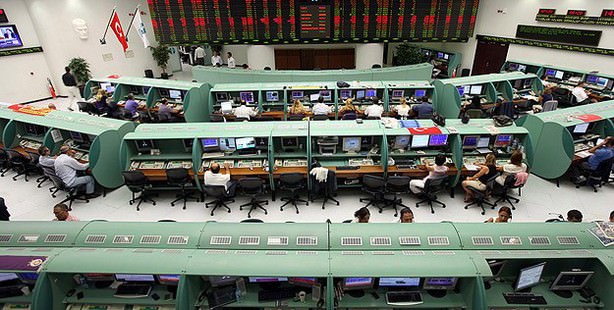
    The Istanbul-based anti-graft operation that was launched on December 17 and ongoing crisis between the government and the judiciary had a negative impact on markets. Last week, the Lira dipped to 2.17 against to the US dollar and 3.03 against the euro. The Borsa Istanbul 100 Index (XU100) fell to 63,885, reaching its lowest level since 2012, while the two-year bond yields rose above 10 percent.
    The Turkish Lira rallied to 2.1315 against the U.S. dollar in yesterday's trading, while the Istanbul stock exchange jumped over 6 percent to reach 65,944.10.

    The worst scenarios already in priced

    With the worst scenarios already in priced, recent turbulence will not cause financial panic, according to market players. Some FX and stock market traders also expect recovery at Borsa Istanbul as well as in the value of Lira. Asaf Savaş Akat, a respected economist from Bilgi University, said "this political fight will not cause financial panic and its effects on exchange rate and stock market will be limited." Finance Minister Mehmet Şimşek commented on the situation in a Twitter message and noted that Turkey's strong macroeconomic fundamentals, combined with a healthy banking system and public finances would provide the country with significant room to respond to shocks. "We face a challenging domestic and external backdrop. However, a pretty negative scenario is largely priced in," Şimşek added.

    At a public address in Manisa province last weekend, Prime Minister Recep Tayyip Erdoğan called the anti-graft operation "a smear and slander campaign" and said, "Turkey's national income would not have increased from $236 bln. to $800 bln. if there was indeed corruption."

    Turkish Economy is fundamentally strong

    The country surpassed expectations to record 4.4 percent growth in Q3 2013 and 4 percent over the first nine months. Market analysts predict that Turkey will exceed the middle term program goal of reaching approximately 4 percent annual growth in 2013. Similarly, Turkey's debt to GDP ratio will likely reach 36.5 percent at year-end, an area where Turkey outperforms 25 European Union member states and continues to meet the Maastricht Criteria that requires countries to keep the debt/GDP ratio below 60 percent. The government budget deficit to GDP ratio is also expected to be 1.5 percent at the end of 2013, one of the lowest in the EU.

    ''AK Party emerges with a clear victory in the March local elections, despite the current shenanigans''
    Jan Dehn, Head of Research at Ashmore, says that "Since he has no serious challenger he should win the presidency handsomely and holding the parliamentary elections at the same time would allow AK Party parliamentarians to ride to victory on his coat tails." In his interview at Morningstar UK Jan Dehn said that "Still, our base case is the AK Party emerges with a clear victory in the March local elections, despite the current shenanigans. This means that the parliamentary elections take place in 2015 as per the original schedule and there will be no material reform and no change in monetary policy before then."

    Last week the world's biggest money manager BlackRock Inc said its seizing an opportunity to buy Turkish stocks after political turmoil rattled other investors and drove down prices. "We have been adding to positions in Turkey, especially in the financial sector, over the last few days, as valuations are now compelling," said Sam Vecht, head of the emerging markets specialist team at BlackRock in London, reported Bloomberg on December 24.

    Monday, December 30, 2013

    TURKEY IS TO OPEN TECHNOLOGY STOCK-EXCHANGE SIMILAR TO NASDAQ IN THE US.

    TURKEY TO GET ITS OWN NASDAQ

    The government is preparing to take significant strides that will advance Turkey’s  to an echelon of high technology. Amongst the moves to be made in the name of advanced technology will be the opening of a technology stock-exchange similar to Nasdaq in the U.S. as well as including training on robots and artificial intelligence which will begin from primary school onwards.


    The government is preparing to take significant strides that will provide the groundwork for a transition to advance technology that will carry the Turkish  in 2023. Included in the plans will be the establishment of a Nasdaq-like technology stock exchange in Turkey as well as the inclusion of training in robotics and artificial intelligence from primary school onwards. Special incentives will be on offer for fourth generation automation, while industry-experienced researchers will be given support to "return home".
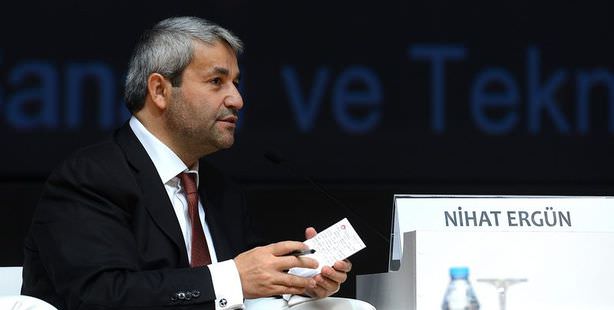
    Speaking at the 3rd Industry Council, which was also attended by Prime Minister ; Industry Minister  announced that the government has decided to support and promote sectors that stand out for making Turkey strong contenders in the international arena.
    "Within the next ten years we need to successfully transition to advanced technology in our industrial production. The state is no longer distanced from the industrialist. We need to develop the business and investment environment in a way that benefits our industrialists, while also facilitating statutes for incentives and support," stated Ergün.
    Industry Minister Ergün announced the following steps the government aims to take to bring the industry up to highly competitive international standards:
    A TURKISH NASDAQ: Turkey plans to set up a technology stock exchange, which will have Turkey's technology firms trading similar to the U.S. NASDAQ. Careers across Turkey will be mapped out on a map of Turkey, which will be used to determine employment policies.
    FULL SUPPORT FOR ENTREPRENEURS: Entrepreneurial studies will begin from primary school onwards. Entrepreneurial candidates will be provided with counseling services and network groups will be established to transfer experience.
    ROBOTIC TRAINING BEGINS: Topics such as informatics, biotechnology, nanotechnology, advanced materials, genetics, robotics, artificial intelligence, organic agriculture, nuclear technology and aerial, space and defense technologies, which are future opportunity areas, will be made compatible with the education system.
    EMPOWERING SME'S: Minister Ergün reiterated that Turkey's strongest sectors, which are high-level competitors in the international arena, will be offered state support. The innovation capacity of SME's will be increased. High priority will be placed on the application of key technology such as biotechnology and nanotechnology in the industry sector.
    It's time for doctorates in the industry…
    According to the information shared by Minister Ergün, researchers who have received doctorates abroad and have experience in certain industrial areas designated by Turkey will be eligible for support for their "return home." Academics will be able to offer industrial advising. In order for state support to be tracked on a single platform, a coordination model, which will include the public and private sectors and NGO's, will be established. Eco-industrial parks and industrial symbiosis will become more widespread with incentives being provided for industrial zones that are able to create the open space necessary for the implementation of these projects.
    This is a translation of an article originally written by Hazal Ateş

    Saturday, December 28, 2013

    TURKEY WILL BE ONE OF THE WORLD LARGEST ECONOMY POWER HOUSE WITH GDP USD 3.46 TRILLION

    Turkey to be 12th largest global economy by 2028: CEBR

    LONDON
    The same report predicts Turkey will rank 17th among the world’s largest economies at the end of 2013 with a GDP of $822 billion. REUTERS photo
    The same report predicts Turkey will rank 17th among the world’s largest economies at the end of 2013 with a GDP of $822 billion. REUTERS photo
    Turkey will be the 12th largest economy of the world by 2028, while Britain will surpass France and Germany to become Europe’s biggest, according to a study released by a British research group on Dec. 26.

    Turkey will climb to the 12th rank with a total gross domestic product (GDP) of $3.46 trillion in 2028, a Center for Economics and Business Research (CEBR) report on “World Economic League Table (WELT) for 2013,” has said.

    The same report predicts Turkey will rank 17th among the world’s largest economies at the end of 2013 with a GDP of $822 billion, 15th alongside other emerging markets in 2018 with $1.28 trillion, and 15th again in 2023 with $2.13 billion.

    “However, the Turkish outlook does depend on political stability and continued disturbances of the kind seen in 2013 could discourage investment and hence growth,” CEBR notes.

    Prime Minister Recep Tayyip Erdoğan speaks during a conference in the Western province of Sakarya, Dec. 27. AA photo

    Assessing the latest CEBR report, Ekinci Economics Consulting Founder Sevin Ekinci told Anadolu Agency; “CEBR previously predicted that Turkey would take the 16th place by 2022. The revision might have come after seeing the slowdown in emerging markets, especially Indonesia, and the weak recovery in the European Union. They used to be much more positive about the Indonesian economy and did see it in 10th place.”

    Strikingly, the study also predicts Britain’s output will outstrip France’s by 2018 before displacing Germany by around 2030.

    “Germany is forecast to lose its position as the largest Western European economy to the UK around 2030 because of the UK’s faster population growth and lesser dependence on the other European economies,” the report said.

    “If the euro were to break up, Germany’s outlook would be much better,” it added. “A Deutsche Mark-based Germany certainly would not be overtaken by the UK for many years if ever.” 

    The think tank’s chief executive claimed that Britain’s economy would grow even faster if it left the European Union.
    December/28/2013

    Thursday, December 26, 2013

    PM TURKEY MAKING TURKEY INTO A REGIONAL POWERHOUSE


    ERDOĞAN RANKS SECOND IN TIME MAGAZINE’S ‘PERSON OF THE YEAR’ POLL 2013

    • y

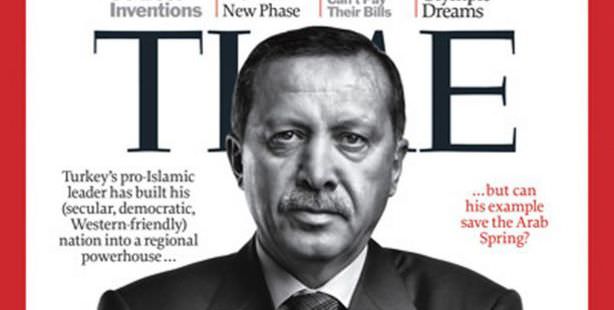
    Prime Minister  is currently ranked in second place for TIME magazine’s 2013 ‘’ poll with 15.9 percent of the votes thus far. Reader voting comes to a close on December 6 and the final winner will be announced on December 11.


    Once again, Prime Minister  is in the top running for the United States' popular TIME magazine's 2013 '' poll. Erdoğan currently stands in second place with 15.9 percent of poll votes. In first place, is American pop star Miley Cyrus with 23.8 percent of the vote. Erdoğan is followed by Chief Minister of the state of Gujara Narendra Modi and in fourth place is Egyptian Defense Minister Abdel Fattah el-Sisi.
    Prime Minister Erdoğan is regularly at the top of TIME magazine's prestigious poll, which asks readers to cast their vote for the person they feel most influenced the news, good or bad. In 2011, Erdoğan was the readers' number one choice. However, TIME magazine's editors make the final decision and selected The Protester as the 'Person of the Year' for 2011. Last year Barack Obama was given the honors.
    TIME's 'Person of the Year' is ultimately decided on by the magazine's editors, however readers have a chance to cast their votes up until December 6 and the results will be influential in the final decision. On December 11, editors will announce whom they have selected amongst the 44 candidates running which also include Syrian President Bashar al-Assad, U.S. President Obama, former US National Security Agency (NSA) employee Edward Snowden Nobel literature prize winner Alice Munro.

    DEMOCRATIC SYSTEM ACCEPTABLE TO ISLAM: MALAYSIA IN THE EAST & TURKEY IN THE WEST

    Democracy and Islam

    By Mohammad Hashim Kamali


    RELIGIOUS VIEWPOINT: A democratic system of rule is on the whole acceptable to Islam
    MUSLIM scholars have differed in their assessment of democracy and constitutionalism from the viewpoint of Islamic principles. The view has gained ground, however, that a democratic system of rule is on the whole acceptable to Islam.

    This is because democracy is about fundamental rights and liberties, the rule of law, a representative and participatory government, separation of powers, and equality before the law.
    Rights and liberties are a manifestation of human dignity which must be protected against the coercive power of the state. Constitution is also an instrument of limitation, organisation, and division of power among the various organs of state.
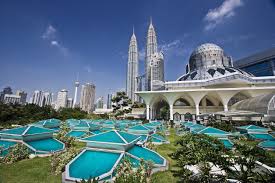
    Kuala Lumpur City is a Symbol of Democratic System of Rules in Muslim World.

    Broadly, Islam approves of most of these and takes affirmative positions on the protection and realisation of people's welfare and maslahah, a consultative government committed to accountability (muhasabah) and justice.

    Islam advocates a limited government, which is committed to the advancement of the goals and purposes (maqasid) of syariah.
    Islam and democracy both seek to realise people's welfare and basic rights of life, personal security, privacy and ownership.

    The syariah recognises these as also the rights to education and employment, and the individual's entitlement to the essentials of life.

    There is much evidence to suggest that Islam envisages a civilian system of rule, not a theocracy. This is because the head of state is elected by the people through consultation, nomination and pledge of allegiance (bay'ah), which translate into the modern day equivalent of a popularly elected government where the locus of authority rests with the people.

    The head of state is accountable to the people, triable before the court of justice, and the people have the authority ultimately to depose him in the event of flagrant violation and miscarriage of duty.
    The head of state has no papal authority to exonerate sin nor to interfere with the religion of a person.
    The civilian character of his office is thus manifested in the legal maxim of fiqh that "The affairs of the head of state is judged by reference to public interest (amr al-imama manut bi'l-maslahah)". The essence of stewardship in Islam is proclaimed in the hadith that "the leader of the people is their
    servant (sayyid al-qawmi khadimuhum)".

    The Rapid Economic Growth of Turkey resulted o from Democratic System of Rule. 


    Yusuf al-Qaradawi approves of democracy and the electoral process, which he resembles to testimony (shahadah) in which the people testify to the suitability and trustworthiness of the candidates they vote for -- and giving shahadah is a collective obligation (fard kifa'i) of the Muslim community.

    Party politics, according to al-Qaradawi, is a means of organised participation in government affairs. This too is resembled to the fiqh schools, or madhhabs, which the learned scholar has characterised as juridical parties, manifesting partisan positions in jurisprudence.

    As for the question that democracy is a western rather than an Islamic doctrine and that it carries western values and viewpoints, al-Qaradawi responds that the Islamic tradition and scholarship have maintained a relatively open profile of receptivity from and contribution to other civilisations. It has taken from other traditions that which is of merit and acceptable to its own values.

    Electoral democracy does not authorise the people or government to change the beliefs of Islam ('aqa'id) nor any of its devotional principles ('ibadat), the halal and haram, and the essentials of morality.

    These are firmly grounded in the Quran and Sunnah and no one may in the name of democracy interfere with them.

    As for the management of community affairs and realisation of people's welfare, democracy is more likely to facilitate rather than obstruct and undermine them.

    Hence democracy is not contrary to Islam. The Islamic public law doctrine of syariah-oriented policy (siyasah shar'iyyah) also enables the ruling authorities to address urgent issues and problems that affect people's lives through syariah-compliant ordinances and initiatives, even at the expense of some unavoidable departure from the rulings of the existing schools and scholars.

    On the subject of sovereignty, which belongs to the people, the constitution, or Parliament (France, the United States, and the United Kingdom respectively), it is not an Islamic doctrine but an aspect of political democracy over which Islamic scholars have expressed reservations.

    Yet many have also drawn a distinction between what they term as absolute sovereignty (siyadat al-kukm), which can make or unmake any law, and executive sovereignty (al-sultan al-tanfidhi).
    Only the latter obtains in an Islamic polity, simply because it is not vested with the authority to change the essentials of Islam and syariah.

    Hence what remains is a kind of executive sovereignty in which political authority is vested in the people and government exercises it on their behalf.

    3. The challenge facing Islamic scholars in Malaysia and elsewhere is perhaps to highlight aspects of harmony between Islam and democracy, and for the government authorities to set in place rules and procedures that ascertain unity and integration of values, of both Islam and democracy, into its legislative processes, with the purpose ultimately to eliminate or minimise the duality of laws in favour of substantive integration and unity.

    Another aspect of this challenge is to enhance and integrate the human rights principles into the applied laws and procedures of both the civil law and syariah.

    Democracy in this digital age presents new challenges for the people's right of privacy, which demands enhanced vigilance from the viewpoints of both the syariah and civil law.
    There is also a need to specify with greater clarity what roles the media and education should play in the advancement of both democracy and Islam.

    It must be added, however much in passing, that Malaysia is not new to most of these -- and some work is also underway on the harmonisation of syariah and civil laws into the legal system of Malaysia, which has taken a fresh momentum with the milestones of progress Malaysia has made in Islamic banking and finance.


    Published in: New Straits Times, Tuesday 23 April 2013

    Wednesday, December 25, 2013

    Turks will be exempted from visa regulations to visit EU nations

    VISA REGULATIONS WITH EU NATIONS TO BE LIFTED IN NEXT 3.5 YEARS


    Foreign Minister Davutoğlu announced on Wednesday that Turks will be exempt from visa regulations to visit  nations by 2017 at the latest and stated, “If Turkey tells the European Union ‘I am ready’ before the timeline established, than the process will have an even earlier head start.


    The torture of attempting to obtain visas for travel to ropean Nations by Turkish nationals will be coming to an end within the next three-and-a-half years as Turkey and the EU have agreed to sign the highly anticipated on December 16 in Ankara in return for the start of visa liberalization dialogue to exempt Turkish nationals from EU visa regulations within the next three-and-a-half years.
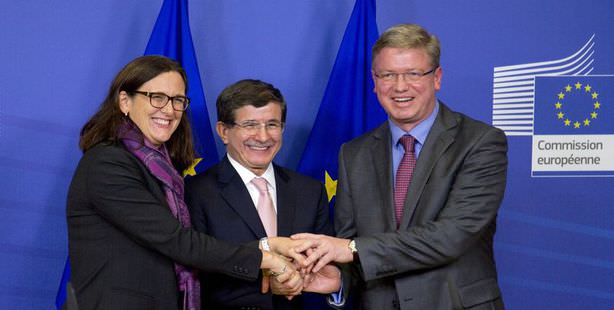
    Foreign Minister  who attended a NATO foreign ministers meeting in Brussels on Wednesday and also met with Cecilia Malmström, member of the European Commission in charge of home affairs, and Stefan Füle, the EU commissioner for enlargement. Davutoğlu shared the good news with SABAH about the impending visa liberalization for Turks and delved into the finer details of the historical agreement.
    Explaining that the past four years of arduous diplomacy by Turkey has altered EU literature, Davutoğlu stated, "The Readmission Agreement will be signed within a month. Afterwards, Turkish citizens will be exempt from visa regulations within three-and-a-half-years time."
    NOT A FACILITATING OF VISAS, AN EXEMPTION: Explaining that a consensus was reached during Wednesday' NATO foreign ministers meeting in Brussels, Davutoğlu stated, "Up until now, they figured that  would not be granted prior to the signing of the Readmission Agreement. However, I directly requested visa exemption. The EU was quite surprised by this and were in fact shocked when we made the request." Relaying that the EU requests Turkey transition to a biometric passport system, integrated border management and the signing of the Readmission Agreement, Davutoğlu stated, "Throughout this process, we have realized all of these demands.
    NO DIFFICULTIES FOR THREE YEARS: With the Readmission Agreement, Turkey has agreed to accept migrants who illegally entered into the EU via Turkey. However, according to the agreement reached with the EU, Turkey citizens will be granted a three-year transition period to visa liberalization parallel to the signing of the Readmission Agreement. At the end of this period, a pilot procedure will commence and in line with the agreement, visa exemption is foreseen for Turkish nationals visiting EU nations.

    TURKEY HAS A RIGHT OF RESCISSION: Foreign Minister Davutoğlu also pointed out that Turkey will maintain the right to rescind the agreement throughout this process. "This is a condition we established. Turkey may announce a cancellation of the agreement within six months time. Although they made us a promise, should they not comply with initiating the visa liberalization process, we will rescind from the agreement," stated Davutoğlu.
    WE WILL ALSO PREPARE OURSELVES: Davutoğlu noted that Turkey will not be accepting the return of any migrants within the framework of the Readmission Agreement in the next three-year transition process and stated, "We have expressed our concerns regarding a flow of migrants. There will be no burden of the agreement in the next three years. During this timeframe, we will prepare ourselves. EU funds will also assist in bearing the burden."
    THREE-AND-A-HALF YEARS AT THE LATEST: Davutoğlu explained that the visa liberalization will begin immediately following a three-year transition period and a six-month pilot program and stated, "Three-and-a-half years will be the latest timeframe. In other words, 2017 will be the latest date visa exemption will begin. For example, if in a year or a-year-and-a-half from now, Turkey tells the EU it is ready to implement the Readmission Agreement, then visa exemption will begin six months after this notification is made."
    THE TURKEY MODEL: Davutoğlu also explained that he delivered the message during negotiations that a verbal promise would not be acceptable and stated, "The EU initially stated, 'Let's give you a personal guarantee.' We, in turn, responded by stating, 'A personal guarantee will not do. If it is a verbal promise, then it should be verbal, if it is a written promise, then it needs to be written out, if there is a process, it will be returned with another process and everything will be equal.' They also added Turkey's concerns to the road map prepared, which as a result means we have gained the EU a new decision making format."
    IT WILL NOT BE REMINISCENT OF THE CUSTOMS UNION: Davutoğlu recalled that during his time as an academic he opposed the Customs Union agreement and stated, "When I was an academic, the Customs Union was signed and I opposed, stating, 'Turkey should not open up to a Customs Union before Turkish citizens are allowed to freely travel.' I do not want to be subjected to the same criticism by going down in history as the first minister to sign a Readmission agreement without obtaining visa exemption."
    This is a translation of an article originally written by Mehmet Nayır.
      Source :  Sabah Newspaper Turkey 

    Islam is a religion that has played a tremendous role in building a great civilisation

    The Dynamic ties between Religion and Civilisation


    Civilisation, from its definition, aims at developing more of the social, cultural and material aspects of human life, while religion aims at emphasising the importance of the spiritual dimension and the final destination of man in the hereafter.

    AS long and complex as human history is, an interesting aspect is the dynamic relationship between religion and civilisation and how they impact each other.

    No doubt historically, both religion and civilisation have contributed to a great extent in enhancing human life. Islam, in particular, is an example of a religion that has played a tremendous role in building a great civilisation as history can attest.

    How do we look at similarities and differences between religion and civilisation?

    Religion, as commonly known, emphasises the belief system – especially that which is connected with God and spiritual realities.

    It projects the true world view of life which guides the value system and ethical conduct of human beings. In Islam, religion also provides detailed practical injunctions in every dimension of human life.

    On the other hand, civilisation reflects the advanced and finest stage human beings have reached in their social, intellectual and cultural life in this world.

    The Oxford Dictionary defines civilisation as “the stage of human social development and organisation which is considered most advanced”, while Merriam-Webster defines it as “the condition that exists when people have developed effective ways of organising a society and care about art, science, etc”.

    Those more concerned about the difference between the two may find that both are incongruent and, at times, problematic. The reason is simply that they seem to have different emphases.

    Civilisation, from its definition, aims at developing more of the social, cultural and material aspects of human life, while religion aims at emphasising the importance of the spiritual dimension and the final destination of man in the hereafter. Sometimes, religion is even viewed as an obstacle to civilisation.

    Such a contentious opinion is maintained by several intellectuals and thinkers who had contributed to the development of modern civilisation.

    Karl Marx, for example, alluded to this point through his oft-quoted “religion is the opium of the masses”.

    Earlier, Friedrich Nietzsche, the German philosopher, might have had the same inclination when he declared that “God is dead”.

    Similarly, Michel Foucault, the French philosopher and historian, who echoed Nietzsche on the nature of religion, expressed rather unfavourably that “morality (religion) is the creation of the weak to deter and limit the strong”.

    While the thinkers’ views may be valid, on the one hand, if they were referring to certain deviated practices among religious followers, on the other, it is obviously misleading to pass such judgments on religion as a whole, given the contributions religion has made to the well-being of human beings throughout time.

    One obvious fallacy of such a view is its oversight of the fundamental similarity between the two.

    A prominent characteristic that unites both religion and civilisation is that both share the same end, mainly in bringing the state of human life to the highest and finest level, with religion aiming at a broader and higher objective of encompassing the betterment of human life not only in this world, but also the world to come.

    Having said that, it should be noted that for those who believe in the truth of religion, its understanding is not only confined to mere belief and rituals, but also geared towards building a civilisation.

    For that to take place, the understanding of religion must fulfil the following criteria:

    First, religion should neither be too rigid nor exclusive to embrace and practise. While religious principles are constant and unchanging, its details should be open to adaptations.

    There must be flexibilities in the application of its principles in different contexts, particularly the ever-changing environment.

    Oftentimes, people get confused between religious principles and details which consequently lead to conflicts over unnecessary matters.

    However, not being exclusive does not mean compromising the truth of the religion. We can still uphold religious truth while appropriating its manifestation in line with the contexts surrounding its practices.

    Secondly, religion has to provide ample room for reasoning necessary in scientific and intellectual pursuits, that, in the latter, is not contradictory to or non-parallel with the values and principles that religion espouses.

    Otherwise, disharmony will set in, particularly between religious and scientific-intellectual truths. In the case of Islam, religious values remain instrumental in colouring the dimensions of life.

    Thirdly, the understanding of religion should not be separated from the higher perspectives which relate to its raison d’etre. In Islam, the bigger picture, called maqasid syar’iyyah (higher objectives of syariah), is the ultimate reason why religion is revealed to human beings.

    Based on Quranic descriptions, the reason behind all religious injunctions is to preserve the well being of human beings which can be summarised as the five basic human needs of religion, life, intelligence, progeny and property. A proper understanding of these aspects will enable consistency between belief and practices among religious followers.

    Thus, with the given guidelines, we are probably able to appreciate more the meeting points between religion and civilisation.

    > Dr Mohd Farid Mohd Shahran is Senior Fellow at Ikim’s Centre for Economics and Social Studies. The views expressed are entirely the writer’s own.